 Newsletter
signup
Newsletter
signup
The True Mother Files: How a Cult Religion Infiltrated Japan's Ruling Party
LDP Senior Officials Listed Among the Unification Church’s Roster of ‘Pro-Victory-Over-Communism Lawmakers’: Half a Century of Cooperation Between the LDP and the Church on the Anti-Espionage Law(3)
2026.03.09 18:18 Tansa
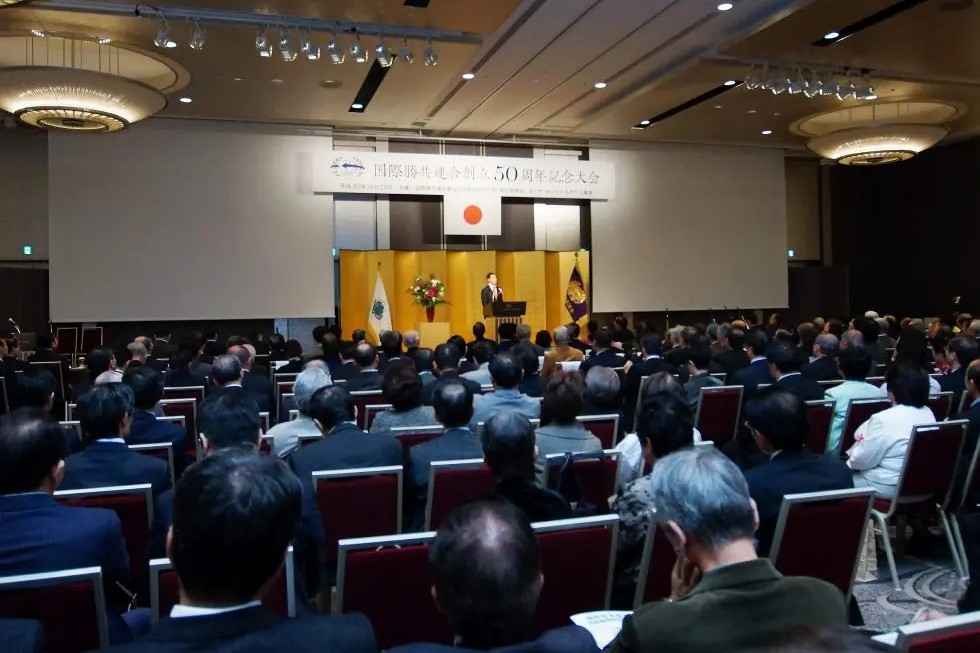
Scenes from the 50th anniversary conference of the International Federation for Victory over Communism held in 2018 (from the International Federation for Victory over Communism Website)
Prime Minister Sanae Takaichi of the Liberal Democratic Party is obsessed with “Anti-Espionage Policy”.
On November 26, 2025, at a debate between party leaders within the Diet, she said “in order to draft a bill quickly, we are considering starting our deliberations before the new year.”
However, the enactment of an anti-espionage law was not something that Takaichi suddenly started calling for. It has been a long-cherished wish of the Liberal Democratic Party and the Unification Church for over half a century.
However, Anti-espionage policy was not something that Takaichi came up with on her own and started to advocate for. It is an ambition that the LDP has held close to their hearts for over half a century.
The TM report describes in detail the close relationship between the LDP and the International Federation for Victory over Communism (IFVC), the organisation responsible for the political maneuvering of the Unification Church; it also states that the organisation was dedicated to enacting the Anti-Espionage Law.
It also speaks about politicians who are running in the upcoming House of Representatives election. Who state that they were “moved to tears” by the 50th anniversary convention of the IFVC.
“A Great Leader has Appeared in Asia. His Name is Moon Sun-Myung!”
Tansa has obtained confidential police documents.
How did the Unification Church infiltrate Japan? During the analysis of how Moon Sun-myung utilised Nobusuke Kishi, Ryoichi Sasakawa, and others to spread the Church’s influence, within the police analysis the following was recorded about the IFVC:
“The activities of followers spread like wildfire, and are centred primarily around universities such as Waseda University, Tokyo University, Kyoto University and Chuo University. By 1968, this expansion had triggered various frictions within families and universities, developing into a major social issue. In response to what was described as a media “barrage,” the Unification Church created the IFVC, presenting anti-communism as its banner in an effort to navigate the crisis.”
The Unification Church was recognised as a religious corporation in Japan in 1964. Its activities were supported by figures including Nobusuke Kishi, the grandfather of Shinzo Abe, as well as right wing activist and fixer Ryoichi Sasakawa.
However, as pointed out within police documents, the activities of the Unification Church drew social criticism and were labeled “The principle movement to make parents cry.”
In July 1967, on the shores of Lake Motosu in Yamanashi, senior figures from the Unification Church, including Moon Sun-myung, gathered at a facility operated by the “Foundation of Japan Motor Racing Association” chaired by Ryoichi Sasakawa, alongside prominent figures from Japan’s right wing. At this meeting, it was decided to establish the IFVC in Japan as a vehicle for the church’s anti-communist political activities. The following April, in 1968, the organisation was formally launched, with Sasakawa and Kishi serving as founding sponsors.
From then, the Unification Church began to collude with the LDP through the IFVC.
In May of 1974 Moon held a “Day of Hope banquet” at the Imperial Hotel. The minister of finance at the time, and future Prime Minister Fukuda Takeo, shook hands firmly with Moon and said:
“A great leader has appeared in Asia. His name is Moon Sun-myung!”
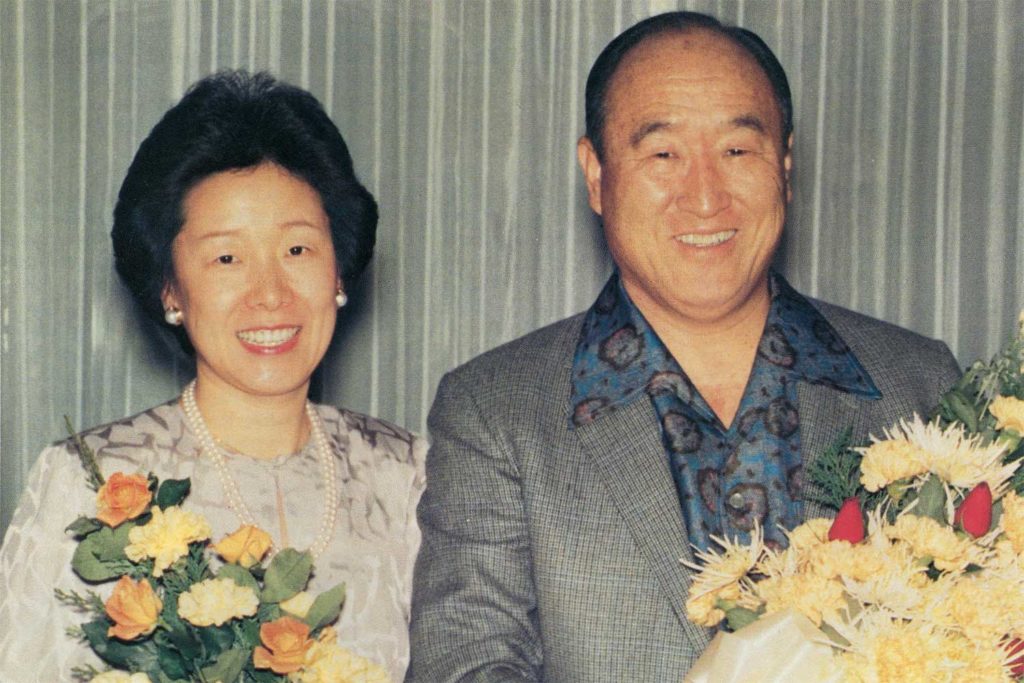
Moon Sun-myung (right) taken from the Unification Church website “FFWPU Mission Support”
“Training” Diet Members One by One
A shared policy goal of the IFVC and LDP was the proposed “National Secrets Bill”, regarded as falling under anti-espionage legislation. The IFVC supported the Citizens’ Conference for Promoting Anti-Espionage Legislation and organised a grassroots campaign that involved university professors, media figures, and local assemblies.
In 1985, the LDP submitted the “National Secrets Bill” to the legislative assembly. The maximum penalty, the death penalty. However, the bill was ultimately scrapped because of concerns that it could extend to the reporting activities of news organisations and even to the everyday lives of civilians.
Even still, the IFVC continued to gain momentum.
In July 1986, a simultaneous House of Representatives and House of Councillors double election was held under the government of Yasuhiro Nakasone, resulting in a landslide victory for the LDP. In its January 1, 1987 edition, the official newspaper of the IFVC, Shiso Shimbun, boasted as follows.
“Believing that a stable majority for the LDP was essential to Japan’s peace and security, we supported 150 candidates in the July simultaneous House of Representatives and House of Councillors double election, and succeeded in seeing 134 of them elected.”
“Each member of the Diet promoting Victory over Communism received training in Victory over Communism principles. In addition, closer ties were fostered between these pro-Victory-over-Communism lawmakers and local branches of the IFVC so that the LDP could fulfil its role as a responsible governing party.”
They also showed unrelenting determination to pursue their long time goal of Anti-espionage policy.
“Working together with the Citizens’ Conference for Promoting Anti-Espionage Legislation and with commentators and lawyers who supported the bill, we devoted significant effort to its enactment, sending petition delegations and postcards of support to the Diet from across the country, and holding frequent rallies in its favour.”
“Going forward, there are delicate issues intertwined with the post-Nakasone situation, but we must not misstep in the final stages, we have to see this through to enactment.”
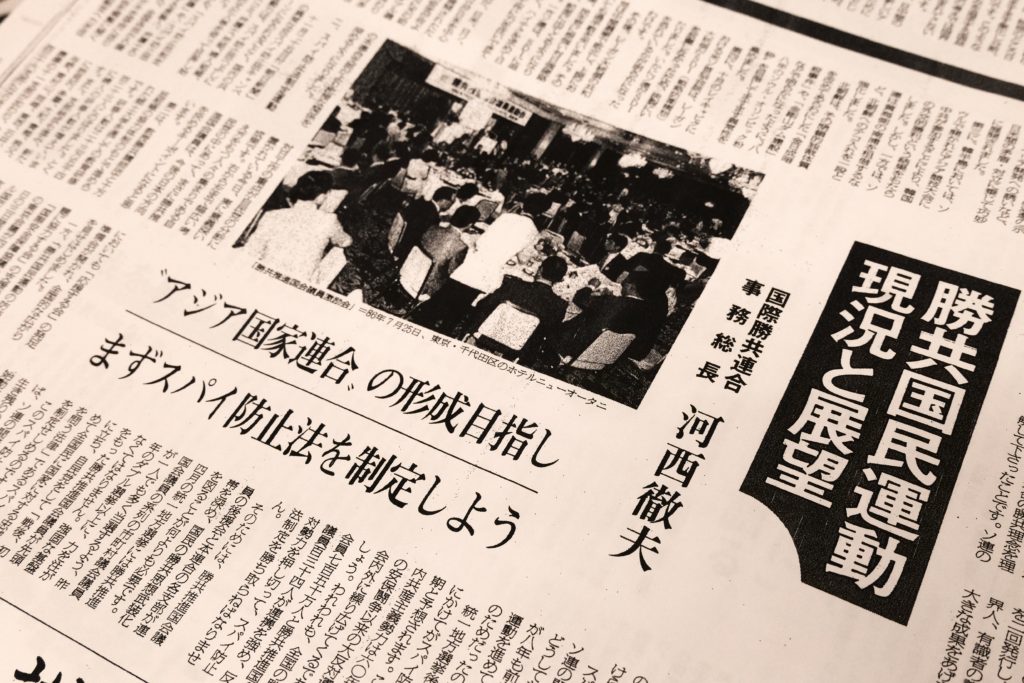
In 1987, the January 1 edition of the Shiso Shimbun, they called for the enactment of the Anti-espionage policy
The Roster of “Pro-Victory over Communism” Lawmakers
So, who, then, are the “pro-Victory over Communism” lawmakers that are so closely connected to the IFVC?
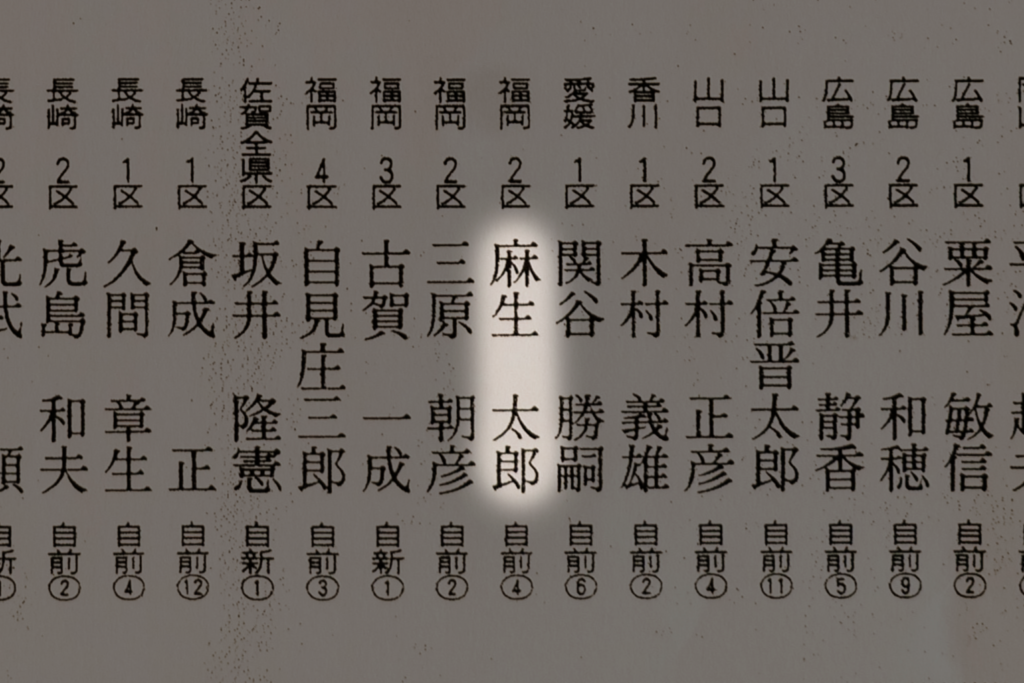
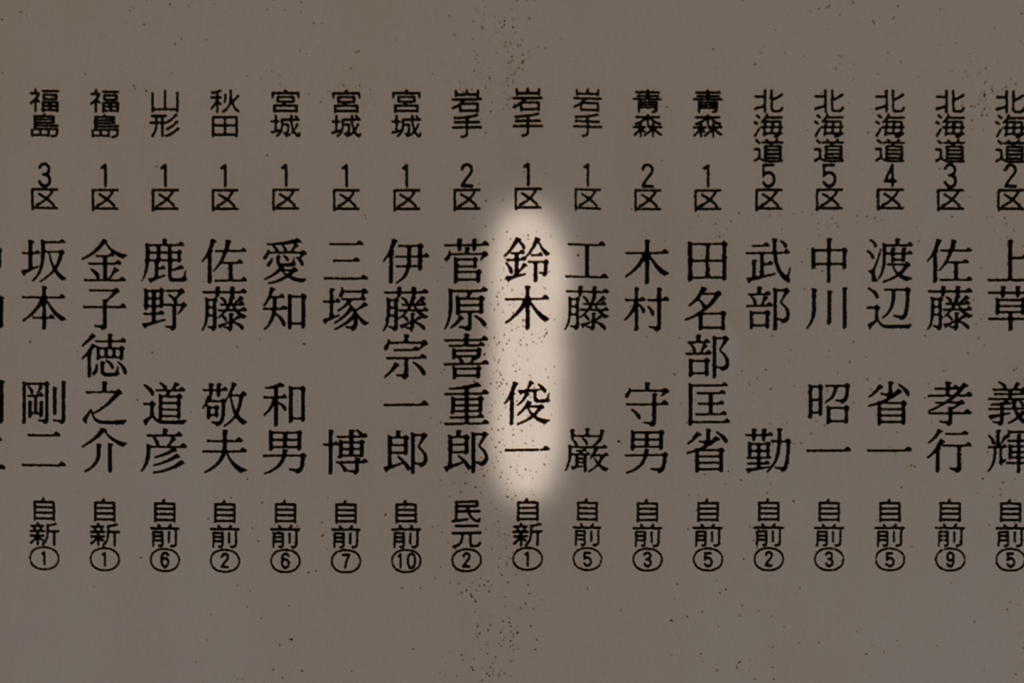
In March 25, 1990, the Shiso Shimbun released the “roster of pro-Victory over Communism” Lawmakers.
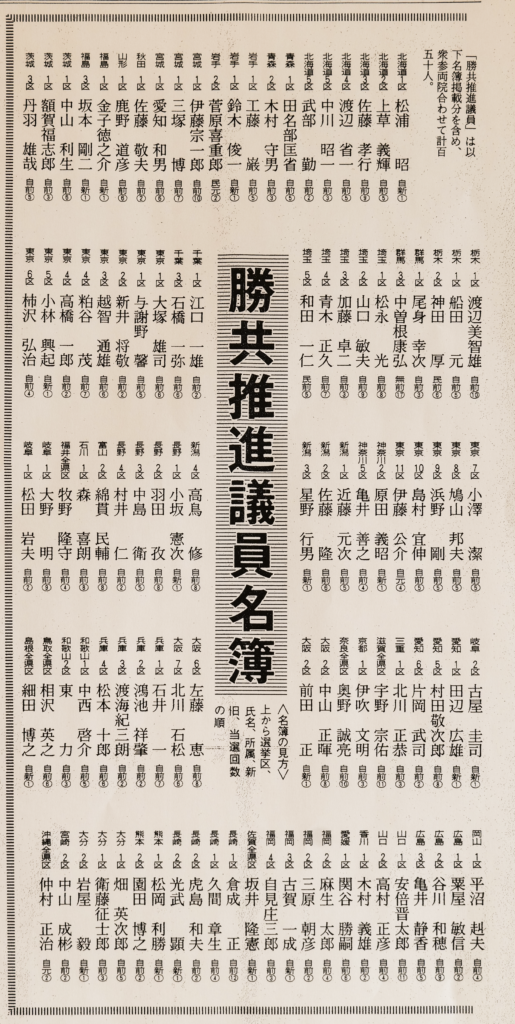
Most of the names were LDP members. However, also listed were Vice-President Taro Aso and Secretary-General Shunichi Suzuki.
Toshihiro Nikai Delivers Congratulatory Address at 50th Founding Anniversary
In 2018, the IFVC marked its 50th anniversary. On October 25, a commemorative event was held at the Capitol Hotel Tokyu in Nagatacho, Tokyo.
Details of the event appear in the TM report, in a section written by IFVC president Masayoshi Kajikuri.
The commemorative conference was held on 25 October in Chiyoda Ward, Tokyo, near the National Diet Building. A total of 101 parliamentarians attended (50 sitting members of the Diet, 44 represented by secretaries or other proxies, six former members, and one proxy representing a former member). In addition, academics, religious figures, business leaders and other prominent individuals, peace ambassadors, and senior followers who had backed the Victory over Communism movement since its early days, 410 people in total gathered at the venue with great enthusiasm.
The event also introduced the 50-year history of the International Victory over Communism movement led by Moon Sun-myung and Han Hak-ja.
The representative who gave the greeting was Hiroyuki Hosoda. At the time, Hosoda was the head of the “Hosoda caucus,” within the LDP, which later became the Abe caucus.
Takuji Yanagimoto delivered a guest greeting and was the former secretary to Yasuhiro Nakasone.
Representing the participating lawmakers, House of Representatives member Hiroyuki Hosoda (former Chief Cabinet Secretary and Chairperson of the Headquarters for the Promotion of Revision of the Constitution) and House of Councillors member Takuji Yanagimoto (Chairperson of the House of Councillors Committee on the Constitution) delivered guest addresses.
Hosoda said “After the war, Japan re-emerged as a peaceful nation”. He then highlighted the threats posed by China and North Korea, he continued to say “Japan and Korea must overcome historical grievances, quickly, and must together contribute to Asia’s development.”
Yanagimoto traced his connection with the Victory over Communism movement back to his days as a student at Waseda University, and encouraged the audience, declaring “I hope that the Victory over Communism spirit will spread worldwide.”
The Unification Church Chairman, Eiji Tokuno, explained why he rejects communism, drawing on the ideas of Mun Sun-myung and Han Hak-ja.
Tokuno presented three key points emphasised by Moon Sun-myung and Han Hak Ja in the Victory over Communism movement: 1.Communism, which denies God, is completely and absolutely wrong, 2.Communism cannot endure for more than 70 years, 3.Victory over Communism follows the “head-wing” ideology. He noted that the world today is in a state of conflict among “brothers,” and added, “These disputes will be resolved by the parents. Only the head–wing ideology can save humanity in its current confusion.”
A congratulatory message was also delivered by LDP Secretary-General Toshihiro Nikai, and the conference concluded with a traditional three-fold cheer of “Banzai.”
Later, messages of congratulations were then shared, including remarks from Liberal Democratic Party secretary-general Toshihiro Nikai and Thomas McDevitt, chairman of the Washington Times Foundation.
Finally, under the direction of the West Youth Choir, the entire audience sang the “Victory over Communism Youth Song.” The conference concluded to sustained applause, accompanied by a three-fold “Banzai” cheer led by Aichi Prefectural Assembly member Takaya Tsutsui.
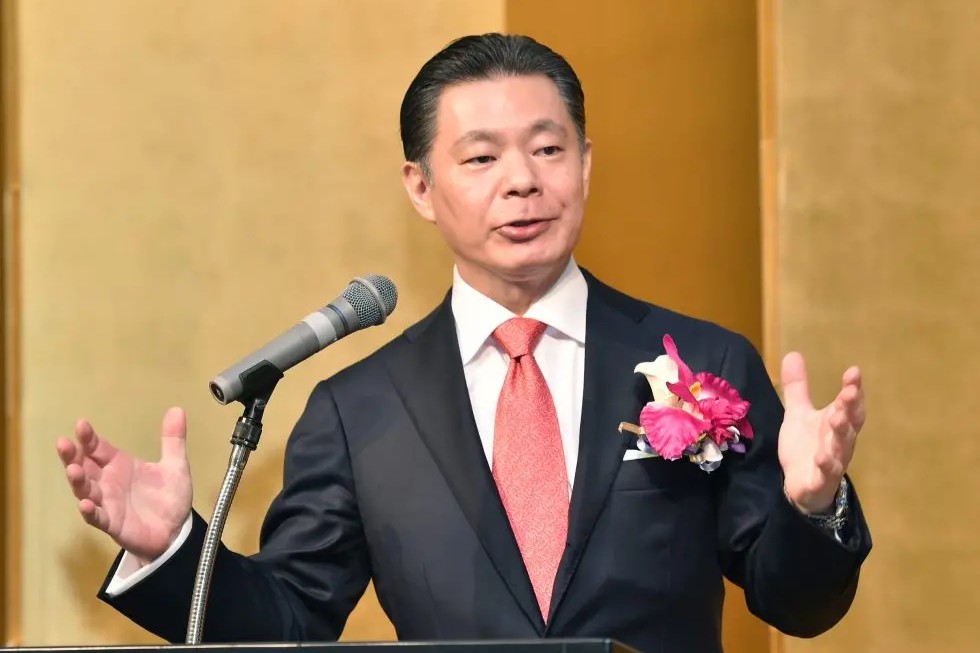
Masayoshi Kajikuri, Chairman of the IFVC, speaking at the organisation’s 50th anniversary conference (Photo: IFVC website)
“Personal Reflections” from Candidates in the 2026 Lower House Election
In his writing within the TM Report, Masayoshi Kajikuri shared statements from politicians who attended the 50th anniversary conference, including excerpts concerning four candidates in the House of Representatives election held between 27 January and 8 February 2026.
First is Kenichi Hosoda (Tokai proportional representation district). In 2022, the Liberal Democratic Party conducted a self-reported survey of members’ connections to the Unification Church, and Hosoda was listed as someone who “has attended meetings of Unification Church-related organisations and delivered greetings.”
Kenichi Hosoda, member of the House of Representatives, on the conference:
“Our caucus leader, Hiroyuki Hosoda, delivered the opening greeting, renewing our resolve to protect Japan. Watching the 50-year historical footage of the International Federation for Victory over Communism and hearing Chairman Masayoshi Kajikuri’s address made me realise just how significant this organisation’s contributions to Japan have been. It was truly moving.”
Hiroaki Saito (Niigata 3rd district), listed in the LDP survey as having “requested election support and accepted volunteers and mobilisation assistance.”
Hiroaki Saito, member of the House of Representatives, on the conference:
“When I was in high school, I set my sights on attending a conservative university and went on to study at Gakushuin University. Even during my time as a student and in my early career, I came to understand the true nature of the communist forces. Listening to Chairman Masayoshi Kajikuri, I was impressed by the Victory over Communism Federation’s past efforts, including the Kyoto gubernatorial election, and its ongoing work opposing communist movements that threaten families. Seeing President Kajikuri speak so passionately left me feeling hopeful.”
Shigeki Kobayashi (Nara 1st district) appeared in the LDP survey as having “attended meetings of Unification Church-related organisations and delivered greetings.”
Shigeki Kobayashi, member of the House of Representatives, on the conference:
“I heard that Chairman Masayoshi Kajikuri studied in Korea from the age of 13. Hearing about his experiences in Korea and learning about the history between Japan and Korea was a great opportunity.”
Mamoru Shigemoto (Kyoto 3rd district) was not listed in the LDP’s survey.
Mamoru Shigemoto, member of the House of Representatives, on the conference:
“The 50-year historical footage of the Victory over Communism movement was very well put together. It also highlighted future challenges, and I felt that the Liberal Democratic Party and the International Federation for Victory over Communism must continue cooperating to shape Japan’s future. I also left with a sense that, thanks to this passion and strong founded ideology, the organisation has been a powerful support in our elections. It made a great starting point.”
(Korean–Japanese translation: Minju Kang)
Key References
Yoshihide Sakurai. (2023). The Unification Church: Sex, Money, and Han—Approaching the Reality. Chuokoron Shinsha. (Published in Japanese)
Yoshifu Arita. (2024). The Unification Church: What No One Has Written About. Shueisha. (Published in Japanese)
Gentaro Kajikuri. (2018). Behind the Scenes of the Early Victory over Communism Movement: Let the Flame of Victory over Communism Burn (Special feature: Half a Century of the Victory over Communism Movement—The International Federation for Victory over Communism’s Continued Campaign Against the Fallacy of Communism). Sekaishiso, Sekaishisosha. Vol. 44, No.4. (Published in Japanese)
Shiso Shimbun. (1 January 1987, 25 March 1990). (Published in Japanese)
Reporting on the “TM Report”
Regarding the TM Report, the Unification Church has refuted it, while the LDP has turned a blind eye.
On January 16, 2026, the Unification Church’s Public Relations Department of the Family Federation for World Peace and Unification published “Our Organization’s View on the ‘TM Special Report’.”
Within their announcement, there is a report by a staff member who is said to have worked under Yun Young-ho, a former World Headquarters director who compiled the TM Report. It points out that the report is highly likely to contain deliberate omissions, alterations, and additions, concluding that it is “extremely lacking in credibility.” The report’s author remains anonymous, and no details regarding their position or role are disclosed.
It also states that, regarding the relationships with Japanese politicians described in the TM Report, “it cannot be ruled out that the expressions within the report go beyond the established facts, that the context has been embellished, or that the report includes content that cannot be verified as factual.”
From the Unification Church side, on January 8, 2026, former Chairman Eiji Tokuno also posted a statement on X. He acknowledged that “it is true that it includes a report I sent to the former World Headquarters Director to report to leader Han” while adding that “it also contains many personal opinions and wishful predictions.”
In September 2022, two months after the assassination of former LDP President Shinzo Abe, the LDP conducted an investigation into its ties with the Unification Church and concluded that “the party has no organisational relationship with the Church.” The investigation was severely inadequate, relying solely on self-reporting by lawmakers. Despite this, current party president Sanae Takaichi has shown absolutely no intention of evaluating the TM Report. On January 26, 2026, she appeared on TBS’s news23. When Akiko Oishi, co-chair of the Reiwa Shinsengumi, pointed out that Takaichi’s name appears in the TM Report, Takaichi called it a “document of unknown origin” and went so far as to say “that would amount to defamation”.
Tansa reviewed the entire 3,212-page Korean version of the TM Report.Making use of AI-based analysis, examining the document together with translators and our reporting partner, the Korean investigative journalism organization Newstapa.
Extensive research has been conducted on the Unification Church and a vast body of investigative findings has been accumulated by journalists and researchers, as well as by lawyers and religious scholars who have worked on victim support and countermeasures. Tansa respects the work of its predecessors and has utilised their findings to examine the TM Report.
As a result, we have determined that the TM Report is a crucial document in unraveling the longstanding codependency between the Unification Church and the LDP.
While continuing to report on the TM Report, we will pursue further investigation. If you have internal information regarding undisclosed ties between the Unification Church and the Liberal Democratic Party, we encourage you to contact Tansa. We will responsibly protect and keep confidential the identity of our sources.
For those wishing to provide information, please refer to the page below. It contains details on contact methods, points to note, and key aspects of the Whistleblower Protection Act.
https://tansajp.org/whistleblower/
The Unification Church changed its name to the “Family Federation for World Peace and Unification” in 2015, and the media refers to it as the “Former Unification Church.” However, because there is continuity in the fundamental problems inherent to the Church, Tansa will refer to it as the “Unification Church.”
January 27, 2026
Tokyo Investigative Newsroom Tansa
(Originally published in Japanese on January 29, 2026. Translation by Jabreel Williams)