
 Newsletter
signup
Newsletter
signup
Adults in the Student Suicide Case ~Media Edition~
“Nagasaki Shimbun Is Not a Public Figure” “Even Editorials Require Verification Inquiry.” Judge Takako Osawa Issues Ruling Contrary to Supreme Court Precedent “Freedom of the Press Trial” Dismisses Former Kyodo News Reporter’s Appeal
2026.03.22 13:02 Nanami Nakagawa
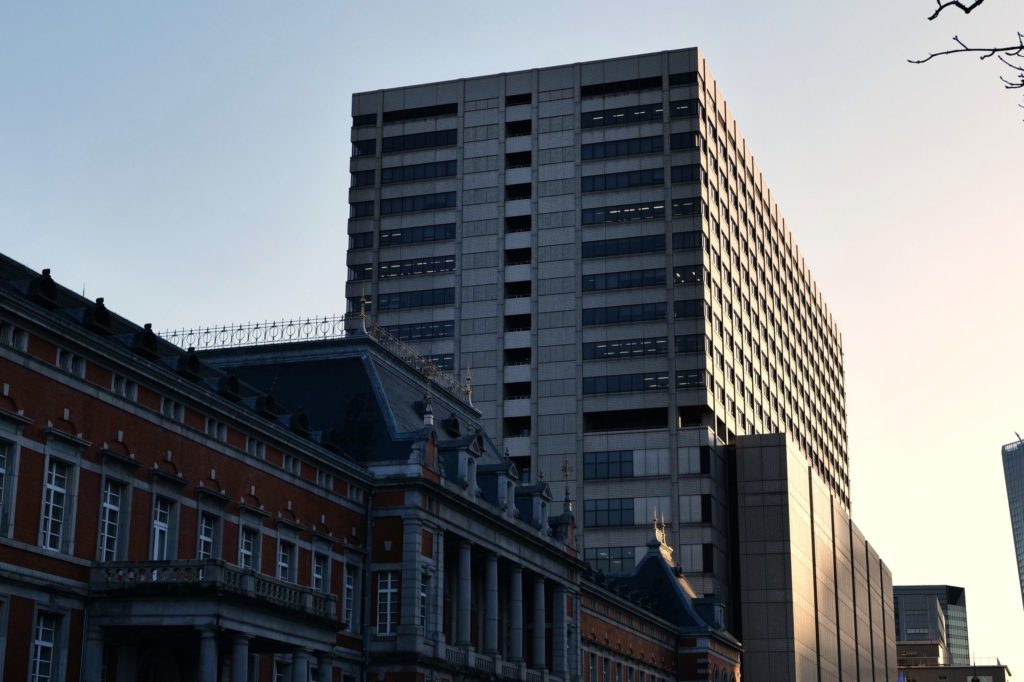
Tokyo District Court in Chiyoda Ward, Tokyo. Photo by Kotaro Chigira on January 16, 2026
On February 20, 2026, Presiding Judge Takako Osawa of the Tokyo District Court dismissed the lawsuit filed by plaintiff Yoichi Ishikawa, a former Kyodo News reporter, in the “Freedom of the Press Trial.”
After criticizing the Nagasaki Shimbun in his book “The Sanctuary of Bullying (Bungeishunju),” Kyodo News revoked Ishikawa’s permission to write outside the company and removed him from his reporting position. In court, Ishikawa argued that Kyodo News’ actions were unjust.
In response, Presiding Judge Osawa ruled that the Nagasaki Shimbun was not a “public figure who should seek broad societal judgment,” and that even for criticism based on facts, it was necessary to inquire the company’s perspective. She concluded that Ishikawa was at fault for failing to do so.
However, fact-based criticism in news reporting has been recognized by past Supreme Court rulings. Presiding Judge Osawa’s ruling contradicts Supreme Court precedent and effectively denies the Nagasaki Shimbun, a regional newspaper, recognition as a public entity.
Attorney Yoichi Kitamura, who represents Ishikawa and is known for defending freedom of the press, stated after the ruling:
“This is utterly anachronistic. It can only be described as a ruling that demonstrates complete ignorance of the significance, role, and function of the media.”
Ishikawa appealed.
The Nagasaki Shimbun is both a “source of income” and a “customer.”
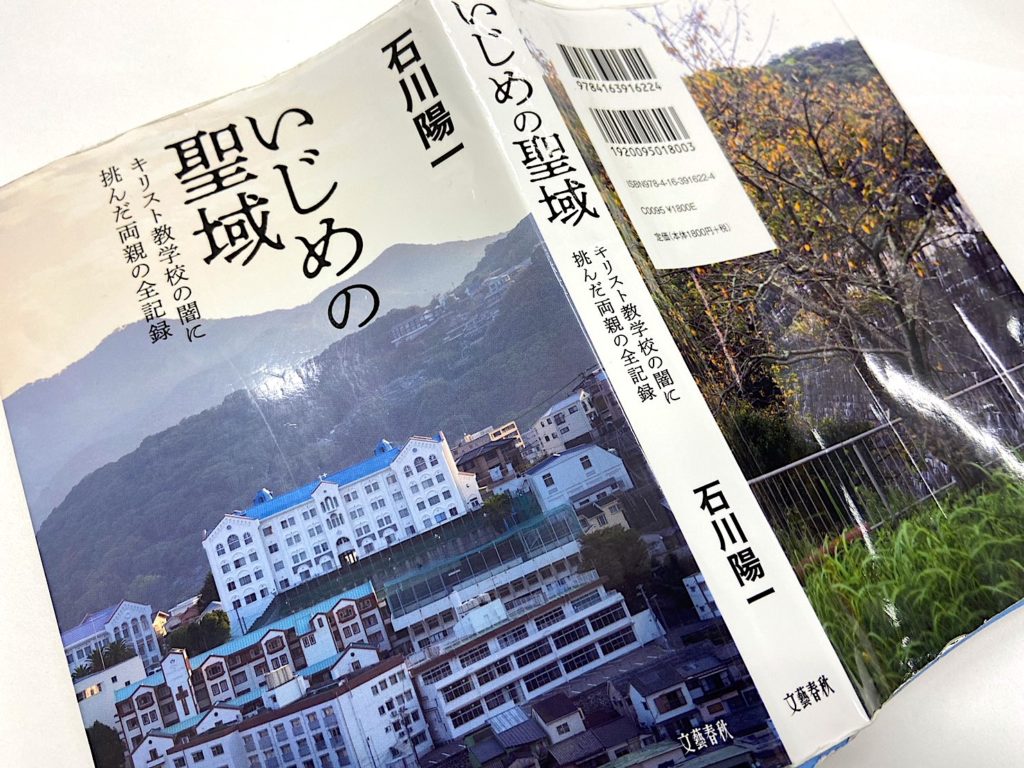
Yoichi Ishikawa’s book, “The Sanctuary of Bullying” (Bungeishunju)
The origin of the incident lies in the book published by Bungeishunju in November 2022, titled “The Sanctuary of Bullying: The Complete Record of Parents Who Challenged the Darkness of Catholic School.” It was authored by Yoichi Ishikawa, then a reporter for Kyodo News, who obtained permission from Kyodo News to write outside the company, conducted extensive investigations, and published this book.
This book investigates a high school student’s suicide due to bullying that occurred in Nagasaki Prefecture in 2017. After the student’s death, the bereaved family, seeking truth and prevention of recurrence, faced opposition from the school, the prefecture, and the local newspaper. The Nagasaki Shimbun published reports shielding the prefecture, which had endorsed the concealment of the cause of death. Consequently, Ishikawa criticized the Nagasaki Shimbun.
The Nagasaki Shimbun was furious by the criticism and protested to Kyodo News. It directed its criticism at Kyodo News rather than the book’s publisher, Bungeishunju, because the Nagasaki Shimbun is a member company of Kyodo News. Kyodo News distributes articles to regional newspapers nationwide, including the Nagasaki Shimbun, and sustains its operations by receiving payment for this service. In other words, for Kyodo News, the Nagasaki Shimbun is a “source of income” and a “customer.”
Kyodo News informed Ishikawa that disclosing the series of events to the media could lead to disciplinary action, then revoked his permission to write outside the company and prohibited reprinting his book. Ultimately, Ishikawa was removed from his reporting position and had to resign.
Kyodo News would protect “customers” for self-preservation, even at the cost of suppressing reportings that could prevent child bullying suicides. To defend the freedom of press, Ishikawa sued Kyodo News in July 2023.
Kyodo News criticized without conducting verification inquiry
Presiding Judge Takako Osawa, Judge Yoshimi Yamane, and Judge Ryo Nomoto wrote in the judgment:
“The plaintiff argues that since the defendant’s published articles included critical commentary without conducting verification inquiries, such inquiries were unnecessary in this case as well. However, the articles cited by the plaintiff concern established facts regarding the Prime Minister’s words and actions, and the sexual misconduct of an actor—matters concerning public figures whose actions warrant broad societal judgment or whose scandals are worthy of criticism. Therefore, the grounds asserted by the plaintiff do not constitute reasons for dispensing with verification reporting regarding the relevant portions of the statements in this case.”
Verification inquiries involve directly questioning sources to confirm facts or understand their opinions. Ishikawa did not conduct verification inquiries with the Nagasaki Shimbun when writing his book.
There was a valid reason for this.
One reason was that there was no need to verify the facts with the Nagasaki Shimbun.
Ishikawa criticized the Nagasaki Shimbun based on newspaper articles, open data released by the prefecture, and statements made in public such as press conferences. Since these are publicly announced, well-known facts, there is no need to verify each one with the Nagasaki Shimbun.
In fact, Kyodo News also acknowledged in court that there were no factual errors in the contents of this book.
Another reason is that Ishikawa’s criticism of the Nagasaki Shimbun was based on facts.
Journalists and news organizations routinely separate facts from commentary in their reporting. This is because commentary based on facts is one of the roles of the press. Newspaper opinion columns and editorials also serve this purpose.
Kyodo News itself routinely engages in criticism. During the trial, the plaintiff cited instances where Kyodo News had criticized politicians, celebrities, and Russia’s state-run television based on facts.
However, Presiding Judge Osawa stated that unlike the Prime Minister or actors, the Nagasaki Shimbun is not a public figure. Since it is not a public entity, criticism based on facts without verification through reporting is not permissible.
Judge Osawa, who issued the unlawful ruling
Fundamentally, the illegality of criticism based on facts was recognized in the Supreme Court ruling on the “Los Angeles Suspicion Fuji Evening News Case” (September 9, 1997, Third Petty Bench ruling; see Supreme Court Reports Vol. 51, No. 8, p. 3804), which examined whether Fuji’s reporting on businessman Kazuyoshi Miura constituted defamation.
Does Osawa possess the qualifications to serve as a judge? She has previously committed the blunder of issuing a ruling that violated the law.
February 2021 ruling by the Tagawa Branch of the Fukuoka District Court. Judge Osawa (then Judge Muramatsu, using her maiden name) sentenced the defendant charged with violating the Stimulant Control Act to “three years and six months imprisonment, with a two-year probationary period for the six-month portion.”
However, this sentencing violated the Penal Code. Imprisonment sentences eligible for probation are capped at three years. In June 2021, the Fukuoka High Court ruled that “the error in the first trial was clear,” overturning the original verdict on grounds of illegality and issuing a new judgment. The Fukuoka District Court publicly stated, “This was caused by insufficient verification by the presiding judge, which is deeply regrettable. We will strive to prevent recurrence.”
Ishikawa appealed. After the verdict, he stated as follows.
“They are simply accepting Kyodo News’s claims without question. I feel the harsh reality of having to conduct reporting in this kind of media environment.”
【Reporter’s Postscript】I want you to imagine the situation waiting beyond your laughter/Reporter Nanami Nakagawa
After the court adjourned, a Kyodo News employee in the gallery grinned.
If the Osawa ruling prevails, it will be problematic for Kyodo News, for all news organizations and their journalists, and ultimately for every member of society.
Even so, Kyodo News rejoices over this ruling not because of journalism, but because it relies on the organization. Reporters from other newspapers and TV stations who show no interest in the trial are no different.
Who will bear the brunt of this?
It is the people who place their hopes in news organizations, which serve as watchdogs over authority, as the “last stronghold.” The bereaved family of a student who took his own life due to bullying, whom Ishikawa interviewed, felt the same way. They even wrote a letter to Kyodo News to prevent Ishikawa from being fired from his reporting position.
As reporters have become mere organizational cogs, power has run amok. While workers’ wages stagnate, corporations collude with the establishment. To distract from political failures, they stoke discrimination and war—
To the reporters reading this article who belong to organizations:
Please do not consider this lawsuit as merely a dispute between Ishikawa and Kyodo News. This is an issue that will restrict our activities. If we do not fight with a sense of urgency, it will destroy society.
(Originally published in Japanese on February 20, 2026. Translation by Mana Shibata.)
Adults in the Student Suicide Case ~Media Edition~: All articles